#02 . Wellness App Creation
#02 . Wellness App Creation
Project: Anxiety App (MVP)
Role: Product and Ux/Ui Designer
Timeline: 8 days
Team Members: 4 Ux/Ui Designers (Eva, Simon, Katie and myself)
Tools: Figma, Figjam
Project: Anxiety App (MVP)
Role: Product and Ux/Ui Designer
Timeline: 8 days
Team Members: 4 Ux/Ui Designers (Eva, Simon, Katie and myself)
Tools: Figma, Figjam
Project: Anxiety App (MVP)
Role: Product and Ux/Ui Designer
Timeline: 8 days
Team Members: 4 Ux/Ui Designers (Eva, Simon, Katie and myself)
Tools: Figma, Figjam
Introduction
Introduction
Creating a new app. For this project, we needed to:
Rethink how users can adopt & commit to a health-improving routine
Address any aspect of well-being, offering a competitively unique or improved experience in the saturated market.
Allow users to monitor their progress & encourage them to adopt healthier lifestyles.
Our mission was to create an MVP — an app ready to help users improve their quality of life by reducing anxiety.
Creating a new app. For this project, we needed to:
Rethink how users can adopt & commit to a health-improving routine
Address any aspect of well-being, offering a competitively unique or improved experience in the saturated market.
Allow users to monitor their progress & encourage them to adopt healthier lifestyles.
Our mission was to create an MVP — an app ready to help users improve their quality of life by reducing anxiety.
Creating a new app. For this project, we needed to:
Rethink how users can adopt & commit to a health-improving routine
Address any aspect of well-being, offering a competitively unique or improved experience in the saturated market.
Allow users to monitor their progress & encourage them to adopt healthier lifestyles.
Our mission was to create an MVP — an app ready to help users improve their quality of life by reducing anxiety.
Discover, Empathize & Research
Discover, Empathize & Research
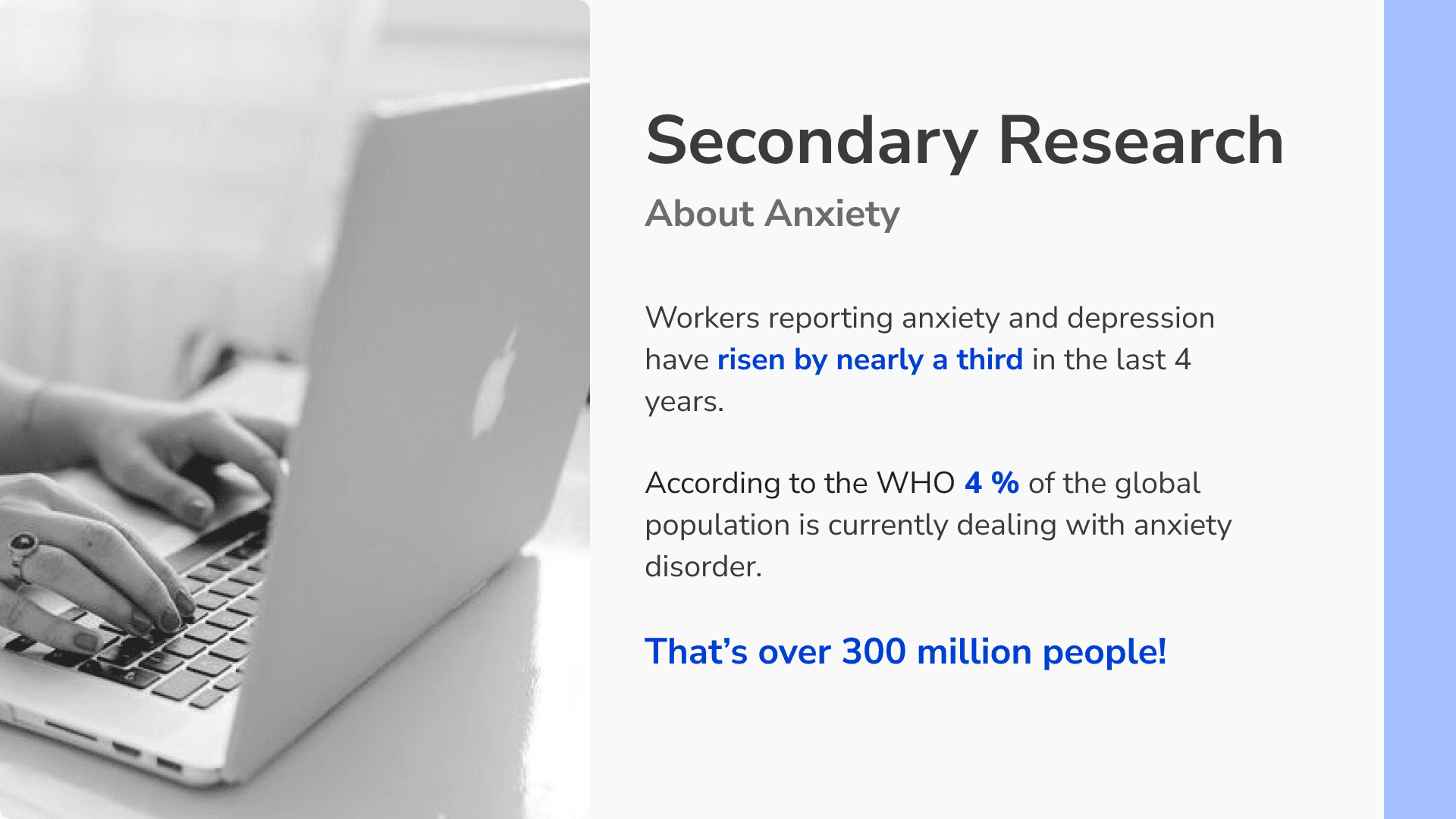
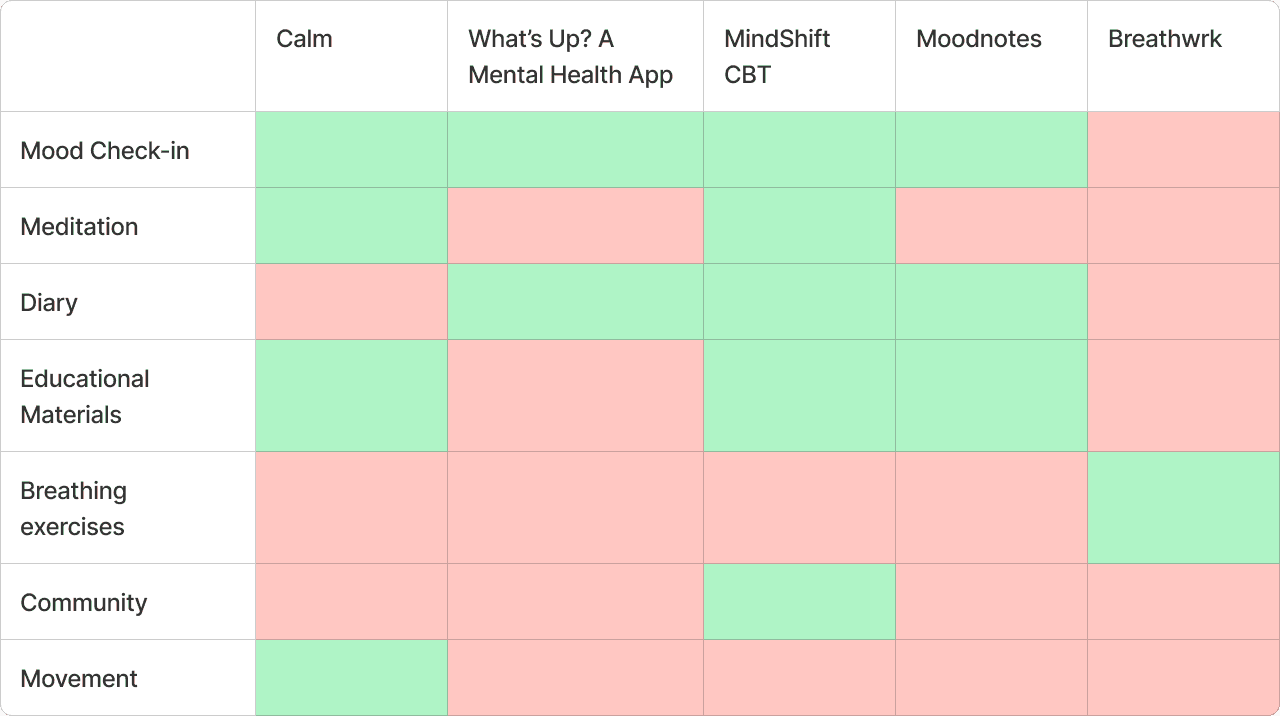
We prioritized organization by setting daily goals on a Kanban board. Our research involved thorough Secondary Research on anxiety and its impact on people's lives, along with a Competitive Analysis revealing that existing mental health apps typically focus on specific aspects such as reflection or guided action, rarely providing an integrated approach to the entire anxiety management process.
We prioritized organization by setting daily goals on a Kanban board. Our research involved thorough Secondary Research on anxiety and its impact on people's lives, along with a Competitive Analysis revealing that existing mental health apps typically focus on specific aspects such as reflection or guided action, rarely providing an integrated approach to the entire anxiety management process.
We prioritized organization by setting daily goals on a Kanban board. Our research involved thorough Secondary Research on anxiety and its impact on people's lives, along with a Competitive Analysis revealing that existing mental health apps typically focus on specific aspects such as reflection or guided action, rarely providing an integrated approach to the entire anxiety management process.
Secondary Research Highlights
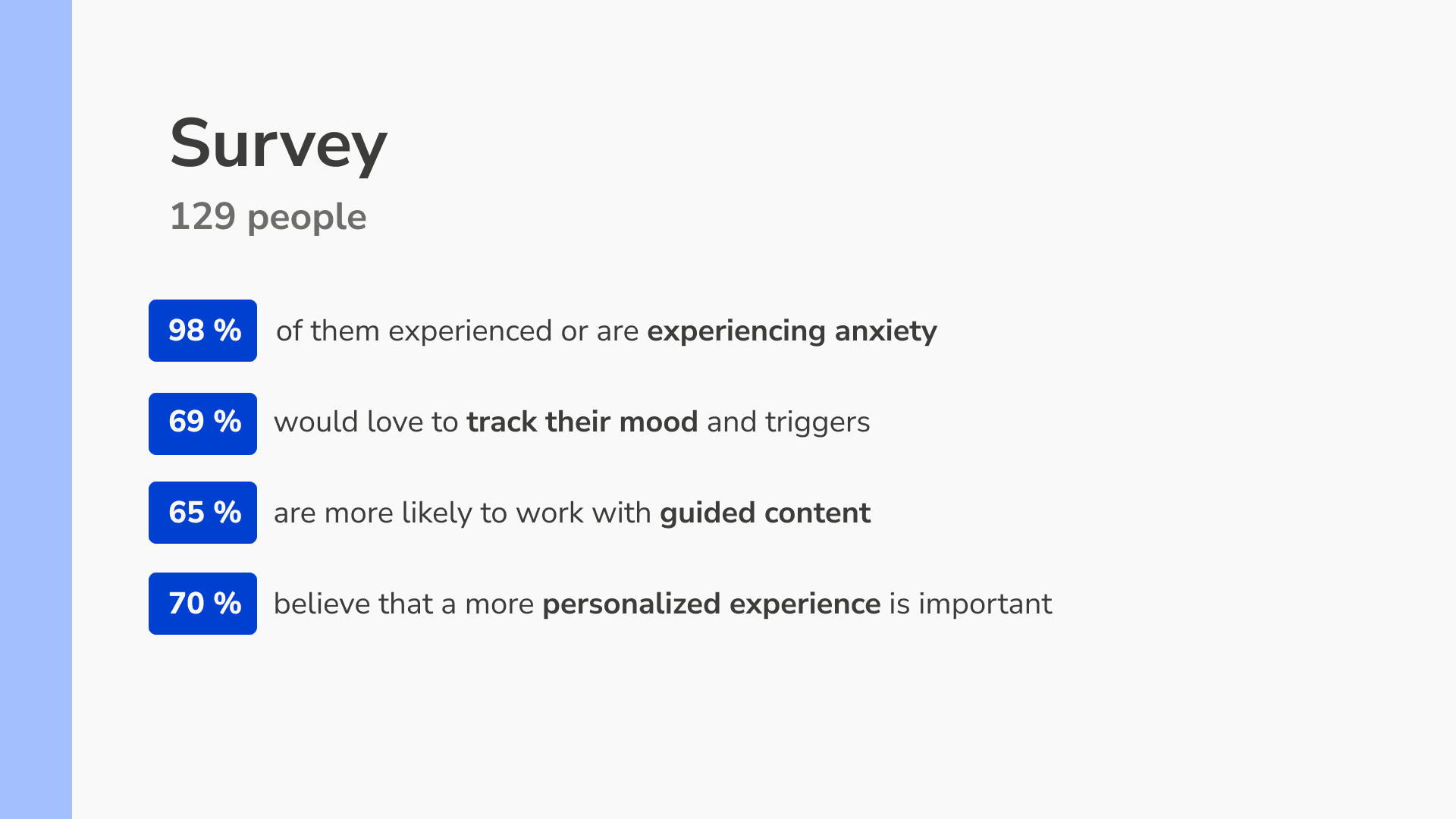
We initiated the survey phase after conducting secondary research and competitive analysis. By using a lean survey canvas, we carefully curated a 10-question survey on Google, ensuring its accessibility and quick completion. Aiming for 100 responses, we exceeded expectations, gathering 129 valuable participants.
The survey data highlighted the need for mood and trigger tracking, the preference for guided exercises, and the demand for personalized content. These findings became the cornerstone of our app, guiding us in addressing essential aspects of anxiety management.
We initiated the survey phase after conducting secondary research and competitive analysis. By using a lean survey canvas, we carefully curated a 10-question survey on Google, ensuring its accessibility and quick completion. Aiming for 100 responses, we exceeded expectations, gathering 129 valuable participants.
The survey data highlighted the need for mood and trigger tracking, the preference for guided exercises, and the demand for personalized content. These findings became the cornerstone of our app, guiding us in addressing essential aspects of anxiety management.
We initiated the survey phase after conducting secondary research and competitive analysis. By using a lean survey canvas, we carefully curated a 10-question survey on Google, ensuring its accessibility and quick completion. Aiming for 100 responses, we exceeded expectations, gathering 129 valuable participants.
The survey data highlighted the need for mood and trigger tracking, the preference for guided exercises, and the demand for personalized content. These findings became the cornerstone of our app, guiding us in addressing essential aspects of anxiety management.
Survey Highlights
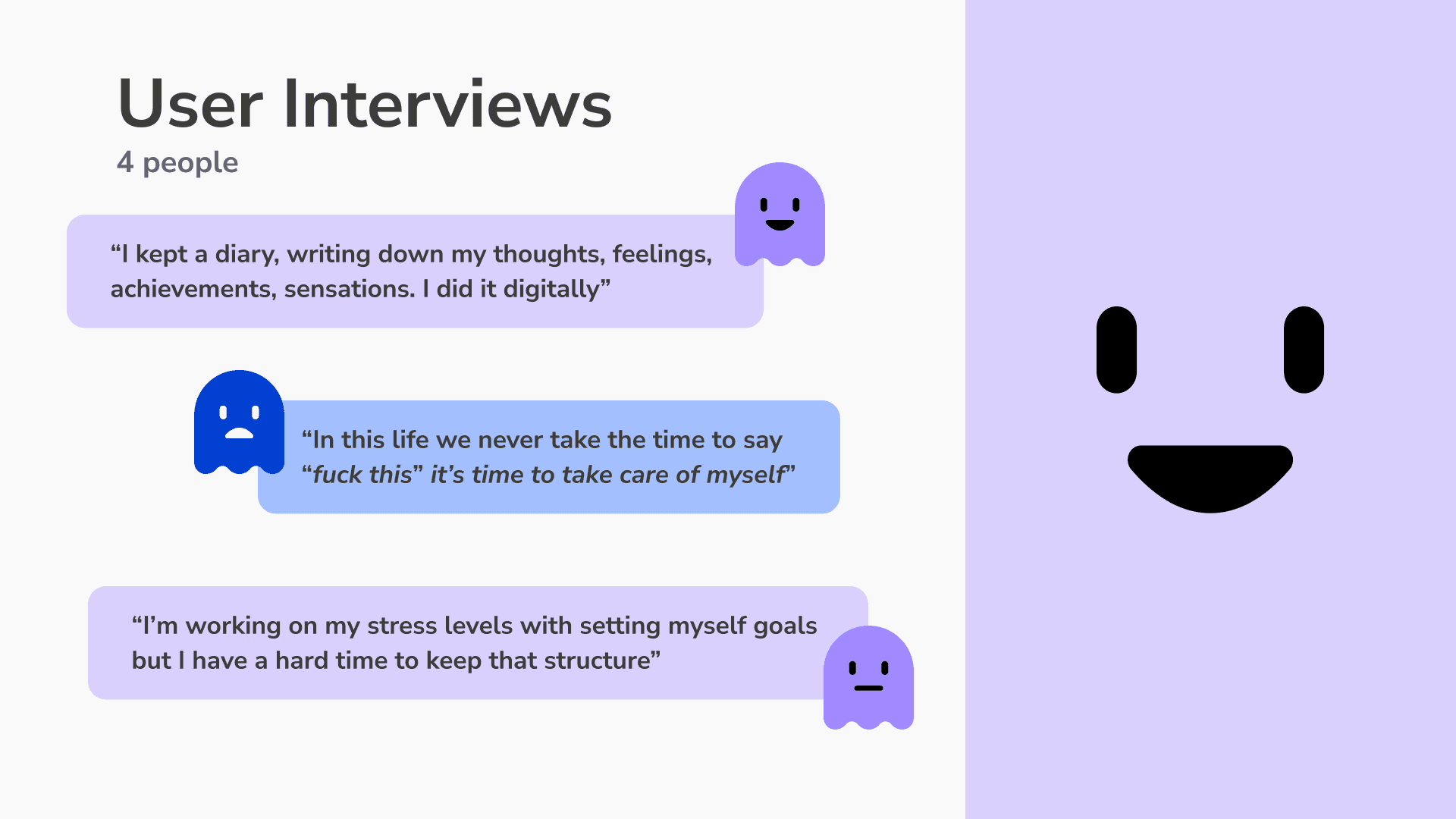
For the Qualitative Research, we tailored interview questions based on survey responses and conducted 4 interviews with individuals experiencing anxiety. These added depth to our understanding and validated survey findings, offering valuable insights. Most users understand what eases their anxiety, but struggle to integrate these techniques into their busy schedules. They not only require helpful content but also need structure and a method to monitor their progress.
For the Qualitative Research, we tailored interview questions based on survey responses and conducted 4 interviews with individuals experiencing anxiety. These added depth to our understanding and validated survey findings, offering valuable insights. Most users understand what eases their anxiety, but struggle to integrate these techniques into their busy schedules. They not only require helpful content but also need structure and a method to monitor their progress.
For the Qualitative Research, we tailored interview questions based on survey responses and conducted 4 interviews with individuals experiencing anxiety. These added depth to our understanding and validated survey findings, offering valuable insights. Most users understand what eases their anxiety, but struggle to integrate these techniques into their busy schedules. They not only require helpful content but also need structure and a method to monitor their progress.
Interview Quotes
Competitive Analysis Results
Define
Define
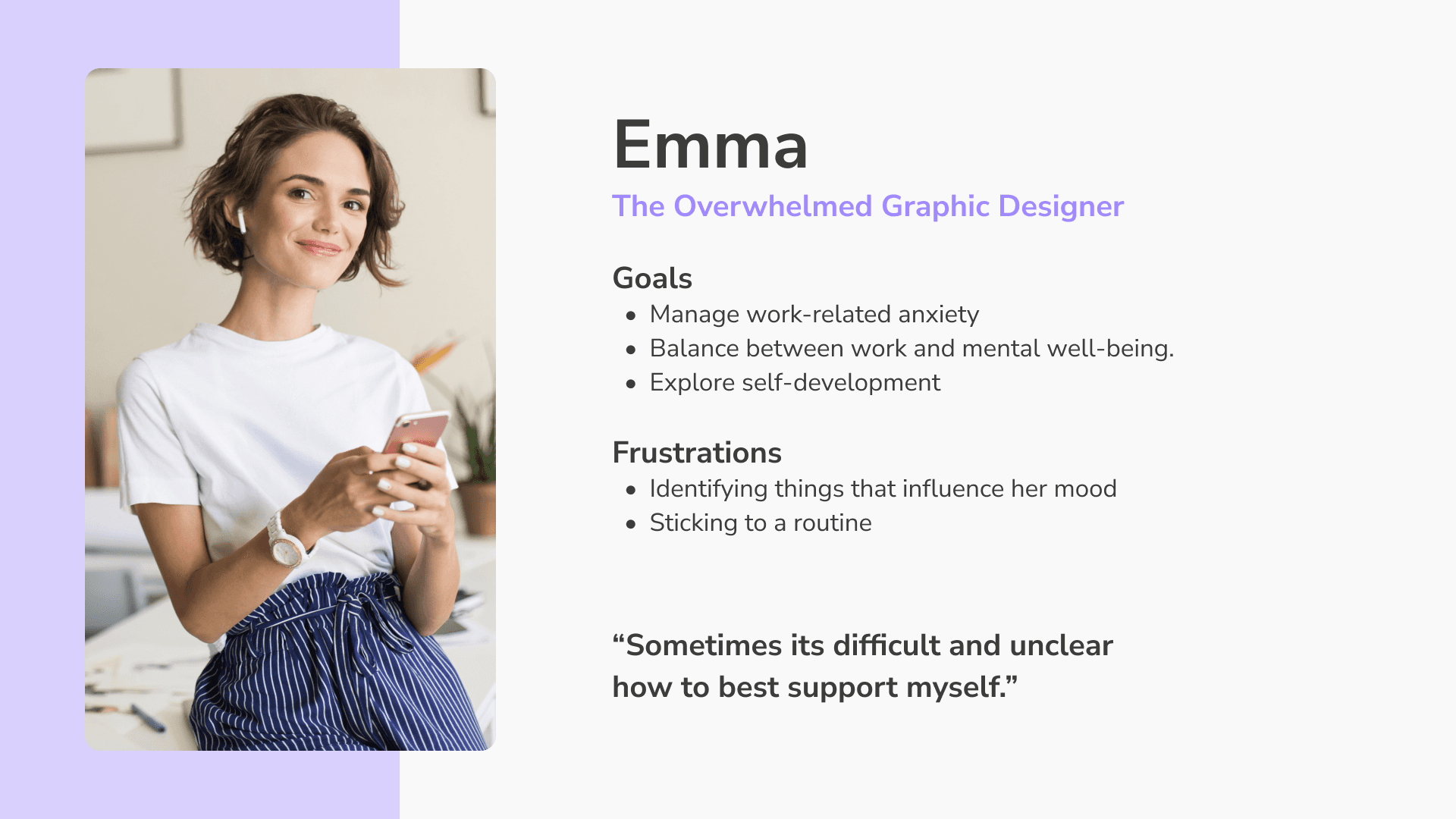
We analyzed survey and interview data, organized insights using the Affinity Diagram, and prioritized key points via dot voting. Skipping the User Journey Map, we directly created the User Persona. Each team member crafted a version in FigJam, later integrating the best elements into the final representation through collaborative discussion.
We analyzed survey and interview data, organized insights using the Affinity Diagram, and prioritized key points via dot voting. Skipping the User Journey Map, we directly created the User Persona. Each team member crafted a version in FigJam, later integrating the best elements into the final representation through collaborative discussion.
We analyzed survey and interview data, organized insights using the Affinity Diagram, and prioritized key points via dot voting. Skipping the User Journey Map, we directly created the User Persona. Each team member crafted a version in FigJam, later integrating the best elements into the final representation through collaborative discussion.
Problem Statement
User Persona
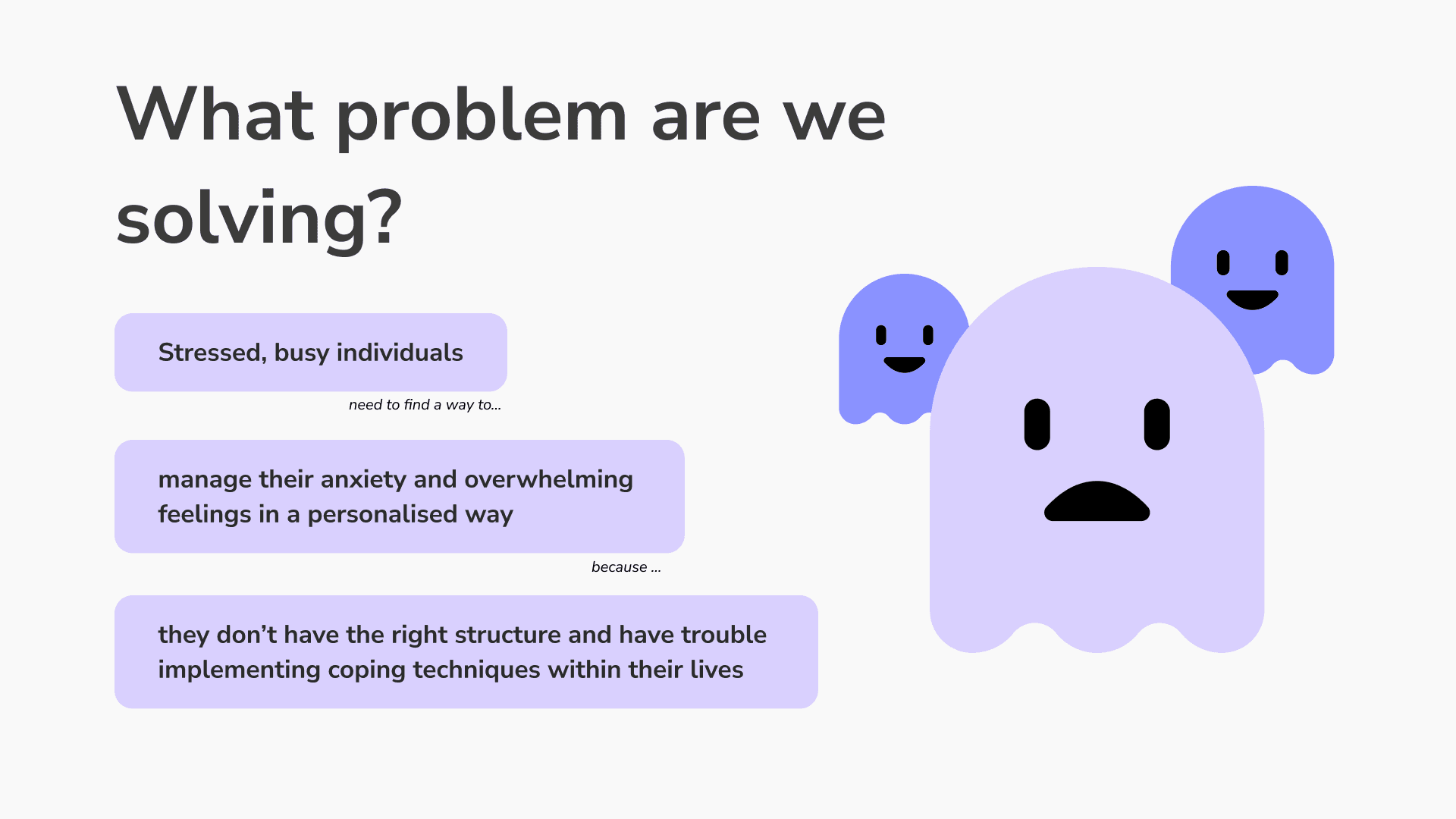
The collaborative effort of our team led to the definition of our final problem statement:
"Stressed, busy people need to find a way to manage their anxiety and overwhelming feelings in a personalized way because they don't have the right structure and are having trouble implementing coping mechanisms within their lives."
This process involved discussions and iterations to ensure clarity and precision. Initially, we worked on different versions separately, asked for feedback from other colleagues, made some adjustments, and finally arrived at the final version. With a well-defined user persona and a clear problem statement, we transitioned seamlessly into the next stage.
The collaborative effort of our team led to the definition of our final problem statement:
"Stressed, busy people need to find a way to manage their anxiety and overwhelming feelings in a personalized way because they don't have the right structure and are having trouble implementing coping mechanisms within their lives."
This process involved discussions and iterations to ensure clarity and precision. Initially, we worked on different versions separately, asked for feedback from other colleagues, made some adjustments, and finally arrived at the final version. With a well-defined user persona and a clear problem statement, we transitioned seamlessly into the next stage.
The collaborative effort of our team led to the definition of our final problem statement:
"Stressed, busy people need to find a way to manage their anxiety and overwhelming feelings in a personalized way because they don't have the right structure and are having trouble implementing coping mechanisms within their lives."
This process involved discussions and iterations to ensure clarity and precision. Initially, we worked on different versions separately, asked for feedback from other colleagues, made some adjustments, and finally arrived at the final version. With a well-defined user persona and a clear problem statement, we transitioned seamlessly into the next stage.
Develop & Ideation
Develop & Ideation
In the ideation phase, we used methods like the Crazy 8 technique to generate lots of ideas. This was the time to express ourselves and go wild. Some of us wrote the ideas, other decided to sketch them. Then, we discussed and voted on them to find the best ones.
In the ideation phase, we used methods like the Crazy 8 technique to generate lots of ideas. This was the time to express ourselves and go wild. Some of us wrote the ideas, other decided to sketch them. Then, we discussed and voted on them to find the best ones.
In the ideation phase, we used methods like the Crazy 8 technique to generate lots of ideas. This was the time to express ourselves and go wild. Some of us wrote the ideas, other decided to sketch them. Then, we discussed and voted on them to find the best ones.
Feature Priortization Highlights
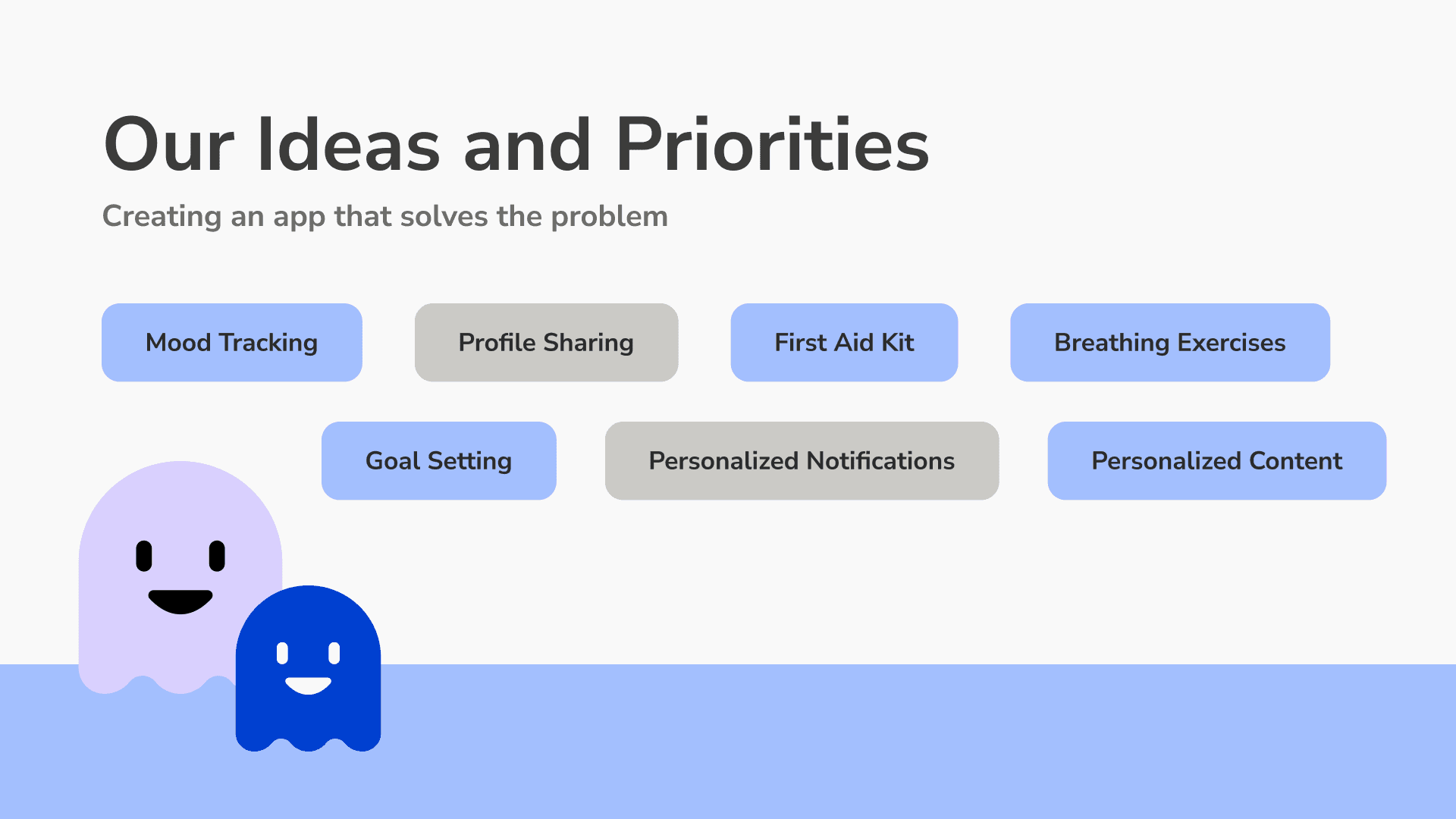
We utilized the MoSCoW method for Feature Prioritization, allowing us to categorize ideas effectively. Recognizing the market gap from our user research and competitive analysis, we observed that most anxiety apps lacked a comprehensive approach. For our Minimum Viable Product (MVP), we narrowed down the features, emphasizing mood tracking, a First Aid Kit, breathing exercises, goal setting, and personalized content as key elements for the app.
We utilized the MoSCoW method for Feature Prioritization, allowing us to categorize ideas effectively. Recognizing the market gap from our user research and competitive analysis, we observed that most anxiety apps lacked a comprehensive approach. For our Minimum Viable Product (MVP), we narrowed down the features, emphasizing mood tracking, a First Aid Kit, breathing exercises, goal setting, and personalized content as key elements for the app.
We utilized the MoSCoW method for Feature Prioritization, allowing us to categorize ideas effectively. Recognizing the market gap from our user research and competitive analysis, we observed that most anxiety apps lacked a comprehensive approach. For our Minimum Viable Product (MVP), we narrowed down the features, emphasizing mood tracking, a First Aid Kit, breathing exercises, goal setting, and personalized content as key elements for the app.
Deliver
Deliver
During the User Flow development stage, our team faced challenges in determining the specific flow to focus on. Each team member created their own user flow, which was then presented to the group. After discussions and iterations, we agreed that low-fi sketching or a Mobile SiteMap would be beneficial in bringing clarity to our approach, and it did. We decided to move forwared, open to apply change if necessary.
During the User Flow development stage, our team faced challenges in determining the specific flow to focus on. Each team member created their own user flow, which was then presented to the group. After discussions and iterations, we agreed that low-fi sketching or a Mobile SiteMap would be beneficial in bringing clarity to our approach, and it did. We decided to move forwared, open to apply change if necessary.
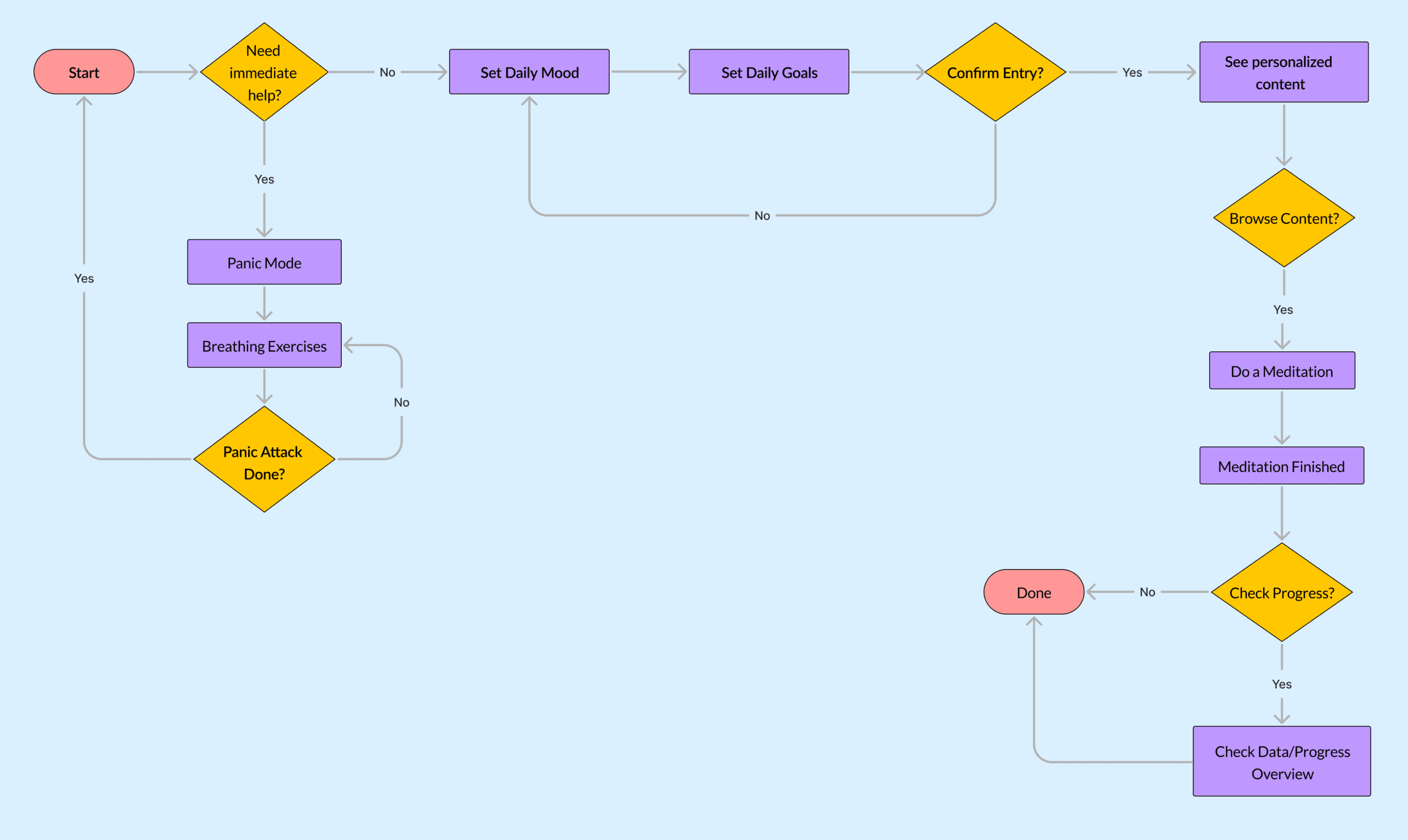
User Flow
Low-Fidelity Designs
Low-Fidelity Designs
In the Low-Fi design phase, our team emphasized collaboration and communication, sharing and discussing paper sketches. Constructive feedback during the Design Critique sessions prompted multiple iterations, leading us to develop Mid-Fi designs. The idea of a ghost mascot was born during the early stages.
In the Low-Fi design phase, our team emphasized collaboration and communication, sharing and discussing paper sketches. Constructive feedback during the Design Critique sessions prompted multiple iterations, leading us to develop Mid-Fi designs. The idea of a ghost mascot was born during the early stages.
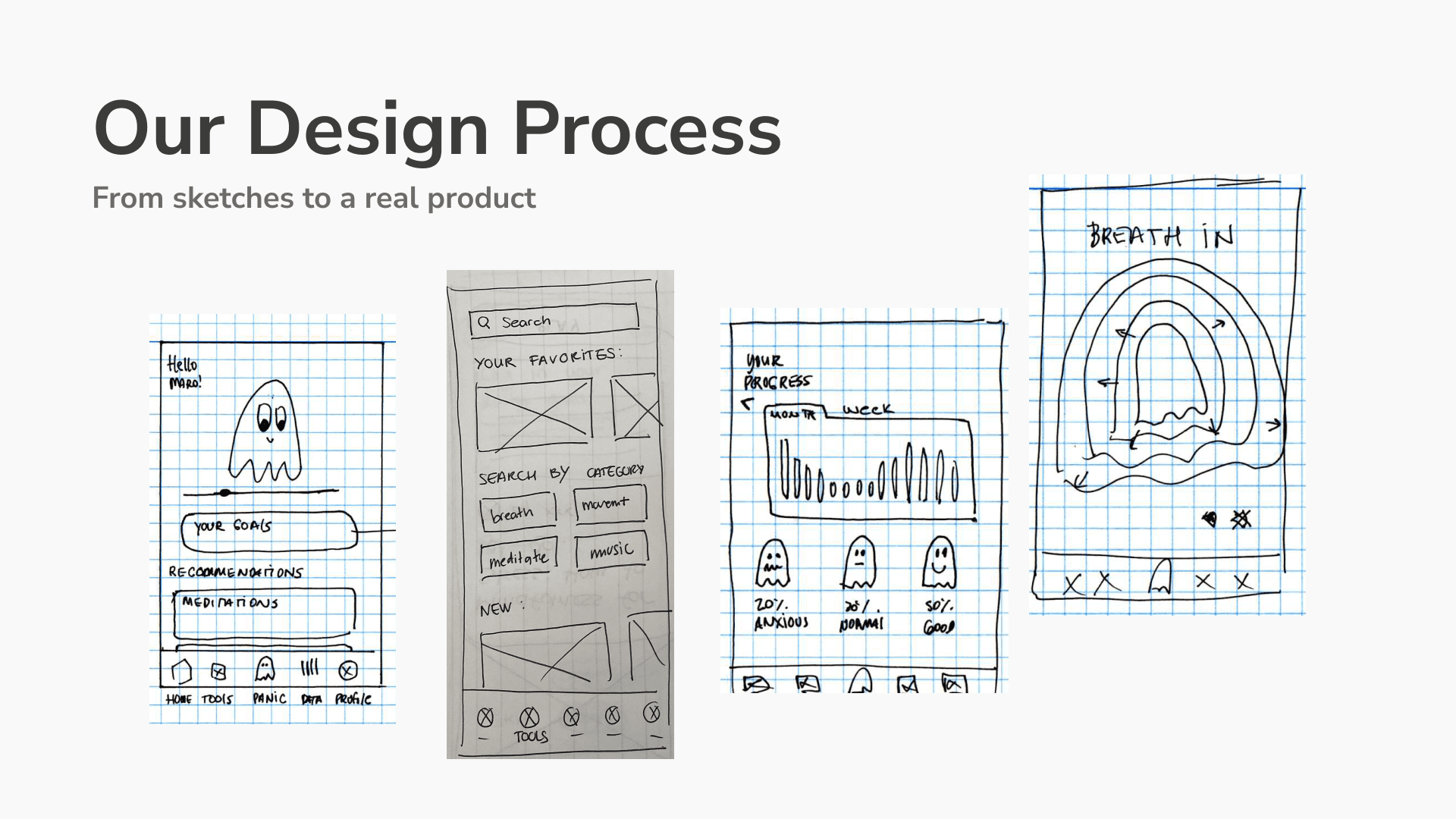
Low-Fidelity Sketches
Mid-Fidelity & Usability Testing
Mid-Fidelity & Usability Testing
During the Mid-Fi phase in Figma, we divided the work among team members, with each focusing on different screens. We then collaboratively refined the designs as a group, prioritizing the mood tracker and insights it will provide to users regarding their behaviour, emotions and feeling realted to anxiety. Recognizing the significance of this feature for users, we also added a "goals" section, ensuring measurability and alignment with users' needs, along with triggers and coping methods.
During the Mid-Fi phase in Figma, we divided the work among team members, with each focusing on different screens. We then collaboratively refined the designs as a group, prioritizing the mood tracker and insights it will provide to users regarding their behaviour, emotions and feeling realted to anxiety. Recognizing the significance of this feature for users, we also added a "goals" section, ensuring measurability and alignment with users' needs, along with triggers and coping methods.
During the Mid-Fi phase in Figma, we divided the work among team members, with each focusing on different screens. We then collaboratively refined the designs as a group, prioritizing the mood tracker and insights it will provide to users regarding their behaviour, emotions and feeling realted to anxiety. Recognizing the significance of this feature for users, we also added a "goals" section, ensuring measurability and alignment with users' needs, along with triggers and coping methods.
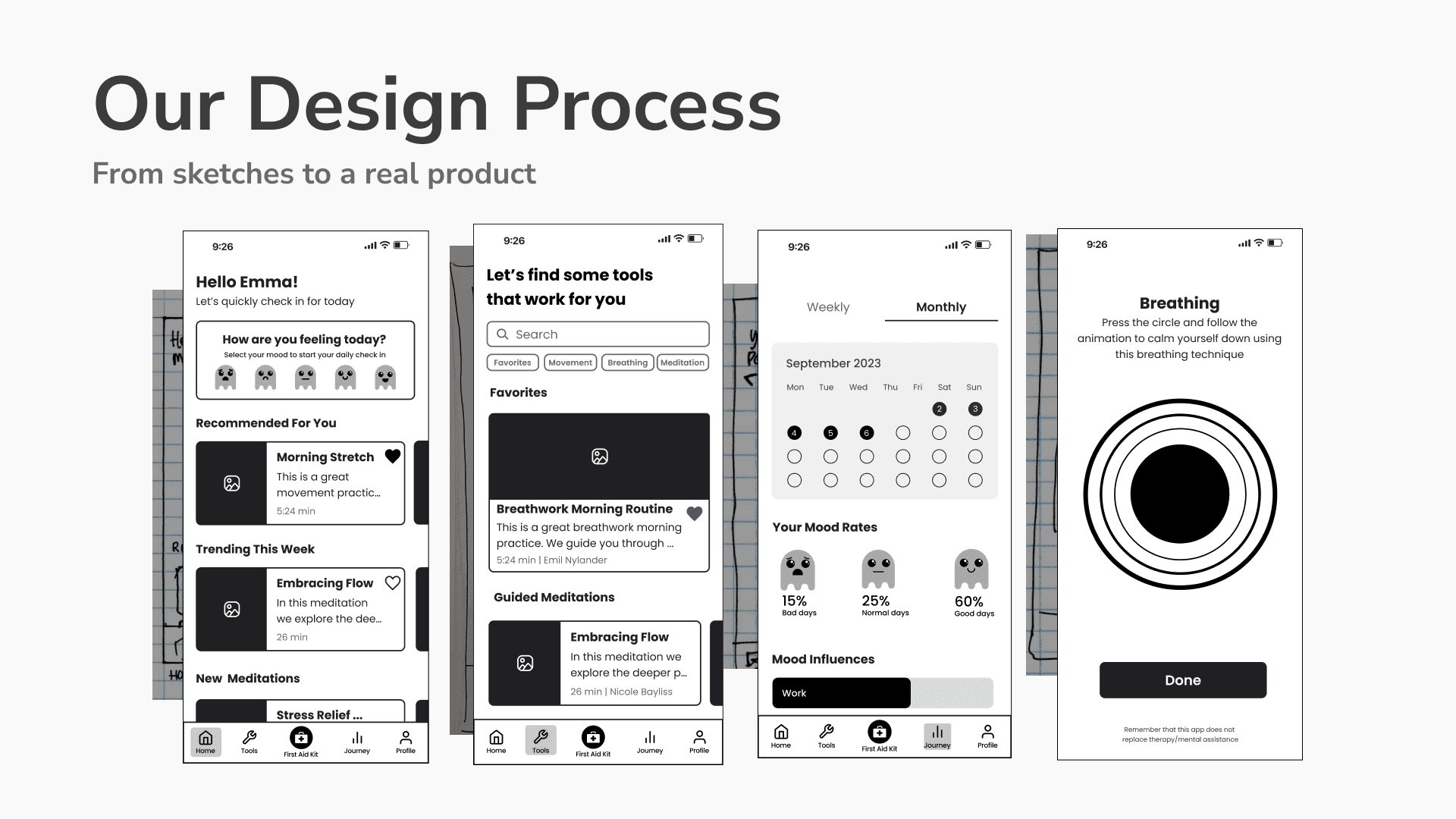
Mid-Fi Designs
After completing the mid-fi wireframes, we transitioned to the prototyping phase, aiming to have a functional prototype ready for testing. We conducted usability tests with 3 users, identifying key areas for improvement. One major issue involved user confusion with the "Tool" icon and corresponding name in the navigation bar, which we addressed by renaming it to "Library" and making other adjustments, such as increasing icon sizes and refining the calendar feature.
After completing the mid-fi wireframes, we transitioned to the prototyping phase, aiming to have a functional prototype ready for testing. We conducted usability tests with 3 users, identifying key areas for improvement. One major issue involved user confusion with the "Tool" icon and corresponding name in the navigation bar, which we addressed by renaming it to "Library" and making other adjustments, such as increasing icon sizes and refining the calendar feature.
After completing the mid-fi wireframes, we transitioned to the prototyping phase, aiming to have a functional prototype ready for testing. We conducted usability tests with 3 users, identifying key areas for improvement. One major issue involved user confusion with the "Tool" icon and corresponding name in the navigation bar, which we addressed by renaming it to "Library" and making other adjustments, such as increasing icon sizes and refining the calendar feature.
Branding & Moodboard
Branding & Moodboard
Before moving on to the High-Fi designs, we focused on defining our brand identity. We established five brand attributes - Calm, Empathic, Restful, Supportive, and Safe, and created a moodboard to effectively communicate them to our users.
Before moving on to the High-Fi designs, we focused on defining our brand identity. We established five brand attributes - Calm, Empathic, Restful, Supportive, and Safe, and created a moodboard to effectively communicate them to our users.
Before moving on to the High-Fi designs, we focused on defining our brand identity. We established five brand attributes - Calm, Empathic, Restful, Supportive, and Safe, and created a moodboard to effectively communicate them to our users.
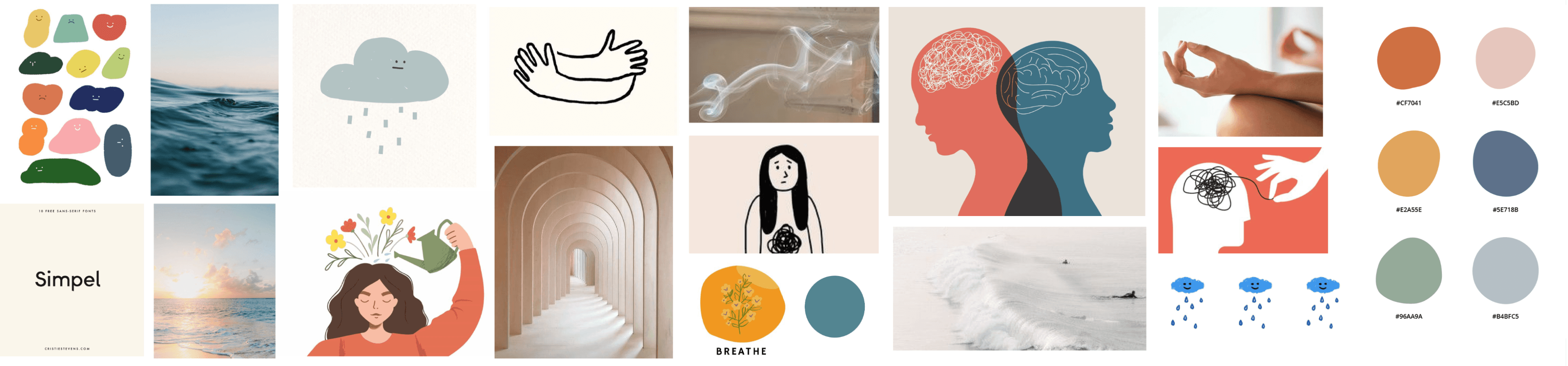
Moodbard
In crafting our app's vision, we emphasized creating a serene and motivational space that acknowledged both uncomfortable and pleasant emotions, encouraging users to embrace their emotional experiences. We carefully selected two distinct colors to represent contrasting moods, integral for our mood tracker feature.
When it came to naming and creating a logo for our brand, we engaged in thorough exploration, ultimately selecting "My Boo" as our final choice. Dot Voting played a crucial role in this decision-making process, ensuring alignment and inclusivity among the team. As for the Typeface, we sought a balance between bold intensity and friendly softness, opting for a round, smooth, and inviting style.
In crafting our app's vision, we emphasized creating a serene and motivational space that acknowledged both uncomfortable and pleasant emotions, encouraging users to embrace their emotional experiences. We carefully selected two distinct colors to represent contrasting moods, integral for our mood tracker feature.
When it came to naming and creating a logo for our brand, we engaged in thorough exploration, ultimately selecting "My Boo" as our final choice. Dot Voting played a crucial role in this decision-making process, ensuring alignment and inclusivity among the team. As for the Typeface, we sought a balance between bold intensity and friendly softness, opting for a round, smooth, and inviting style.
In crafting our app's vision, we emphasized creating a serene and motivational space that acknowledged both uncomfortable and pleasant emotions, encouraging users to embrace their emotional experiences. We carefully selected two distinct colors to represent contrasting moods, integral for our mood tracker feature.
When it came to naming and creating a logo for our brand, we engaged in thorough exploration, ultimately selecting "My Boo" as our final choice. Dot Voting played a crucial role in this decision-making process, ensuring alignment and inclusivity among the team. As for the Typeface, we sought a balance between bold intensity and friendly softness, opting for a round, smooth, and inviting style.
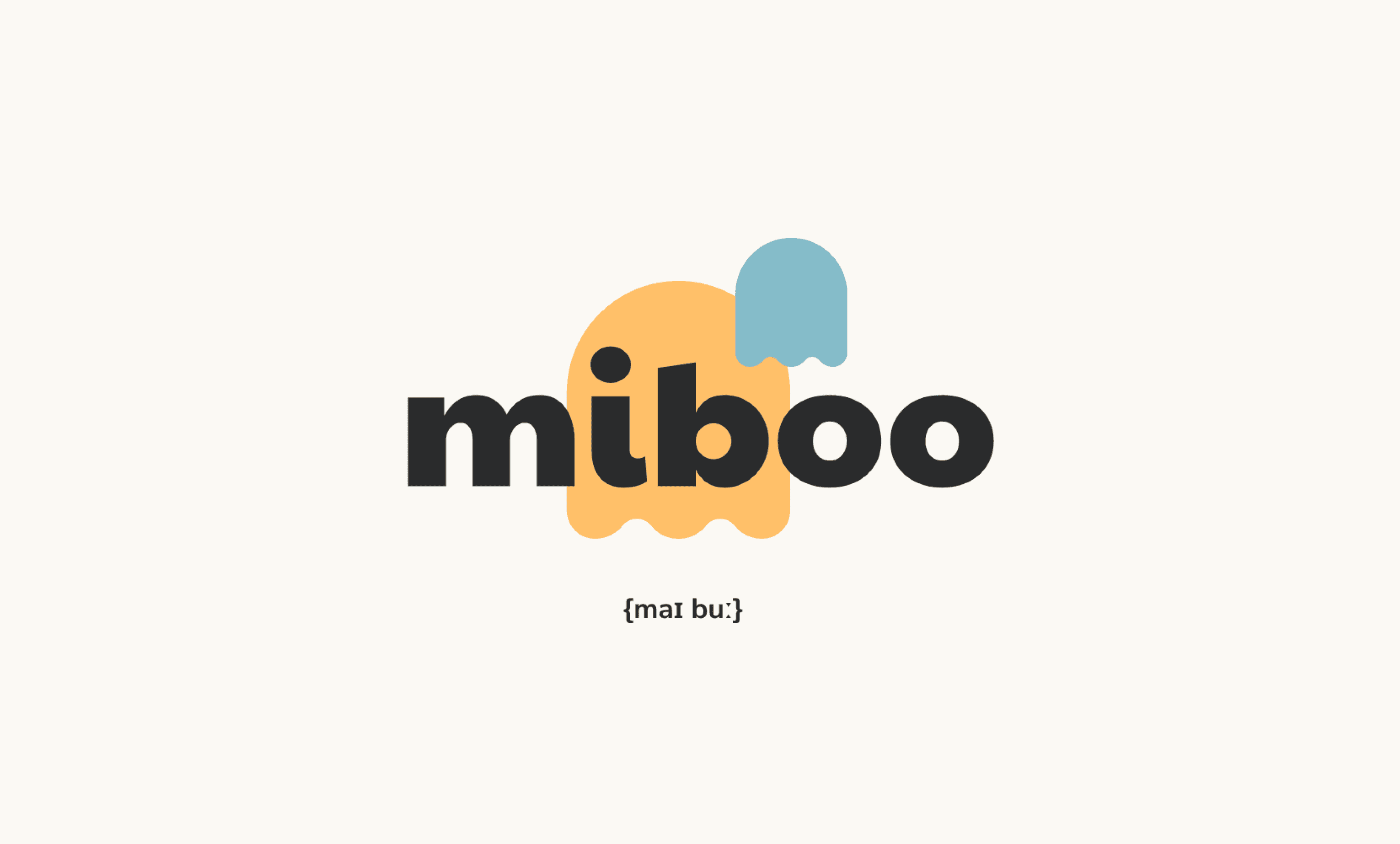
Logo Design
High-Fidelity & Prototype
High-Fidelity & Prototype
During the transition from Mid-Fi to High-Fi designs, our team divided the workload and collaborated to finalize the Style Tile and Components. We carefully considered color choices for the mood tracker ghosts and adopted a minimalist approach for the mascot, ensuring consistency across the UI.
During the transition from Mid-Fi to High-Fi designs, our team divided the workload and collaborated to finalize the Style Tile and Components. We carefully considered color choices for the mood tracker ghosts and adopted a minimalist approach for the mascot, ensuring consistency across the UI.
During the transition from Mid-Fi to High-Fi designs, our team divided the workload and collaborated to finalize the Style Tile and Components. We carefully considered color choices for the mood tracker ghosts and adopted a minimalist approach for the mascot, ensuring consistency across the UI.
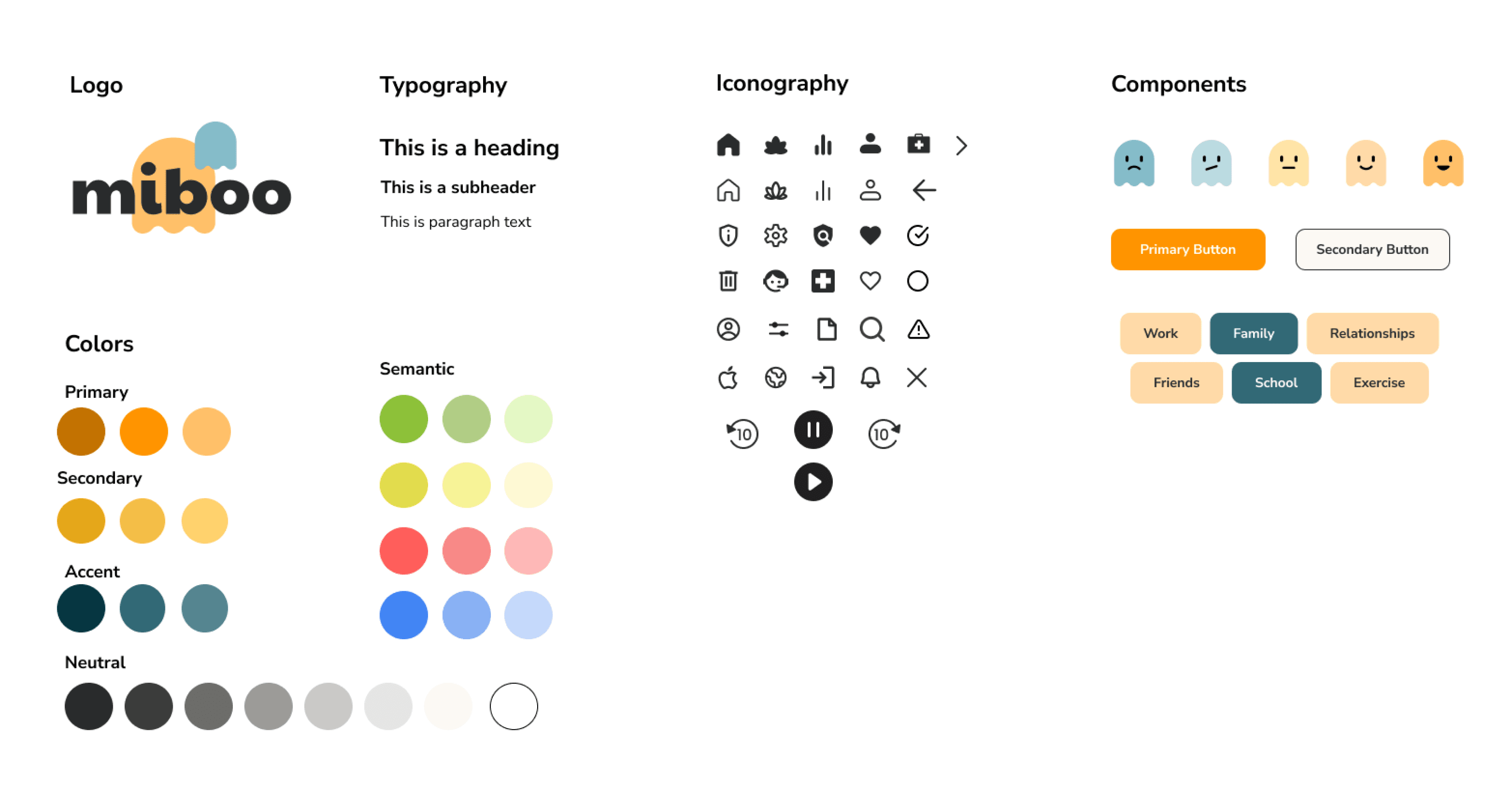
Style Tile
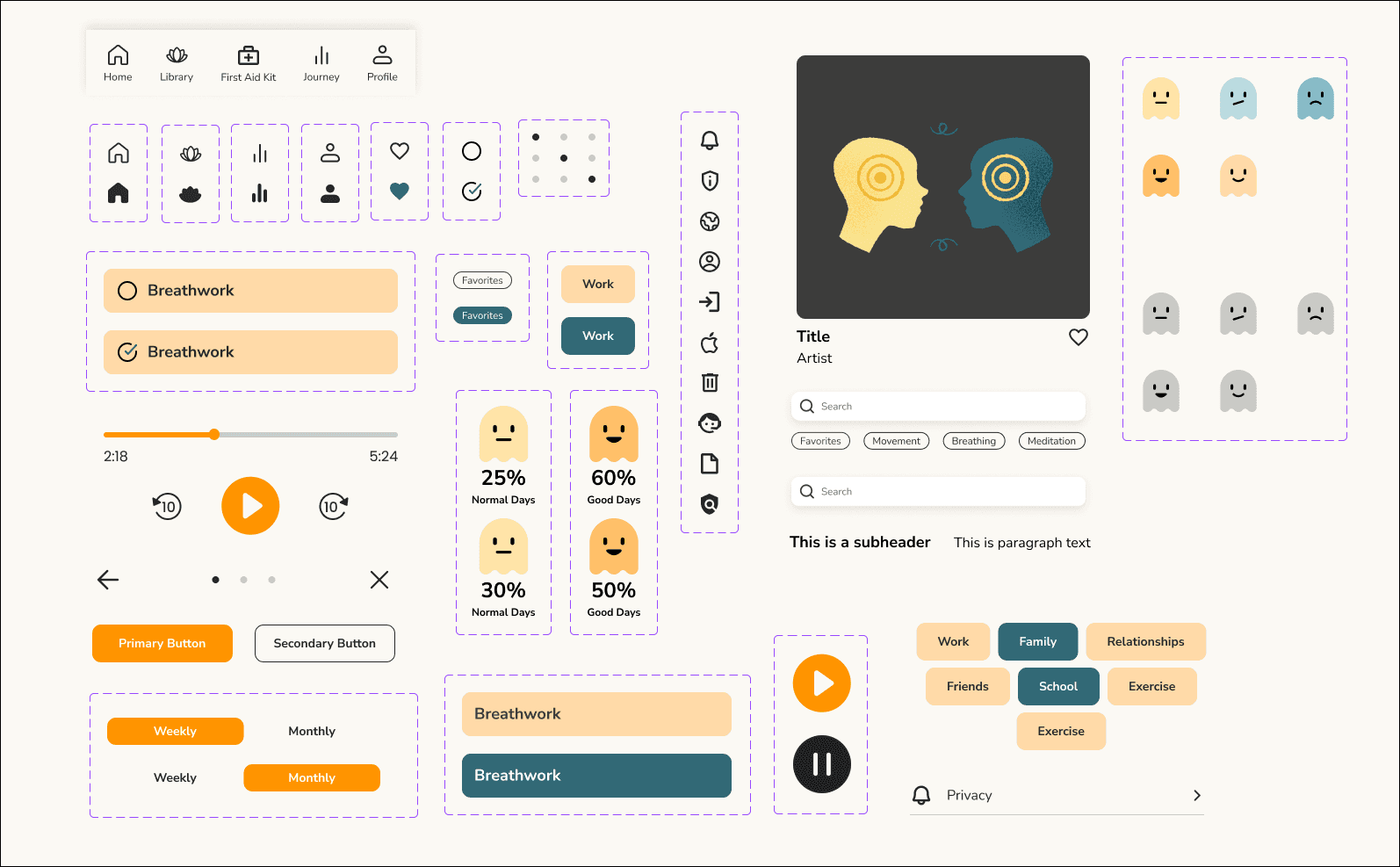
Components
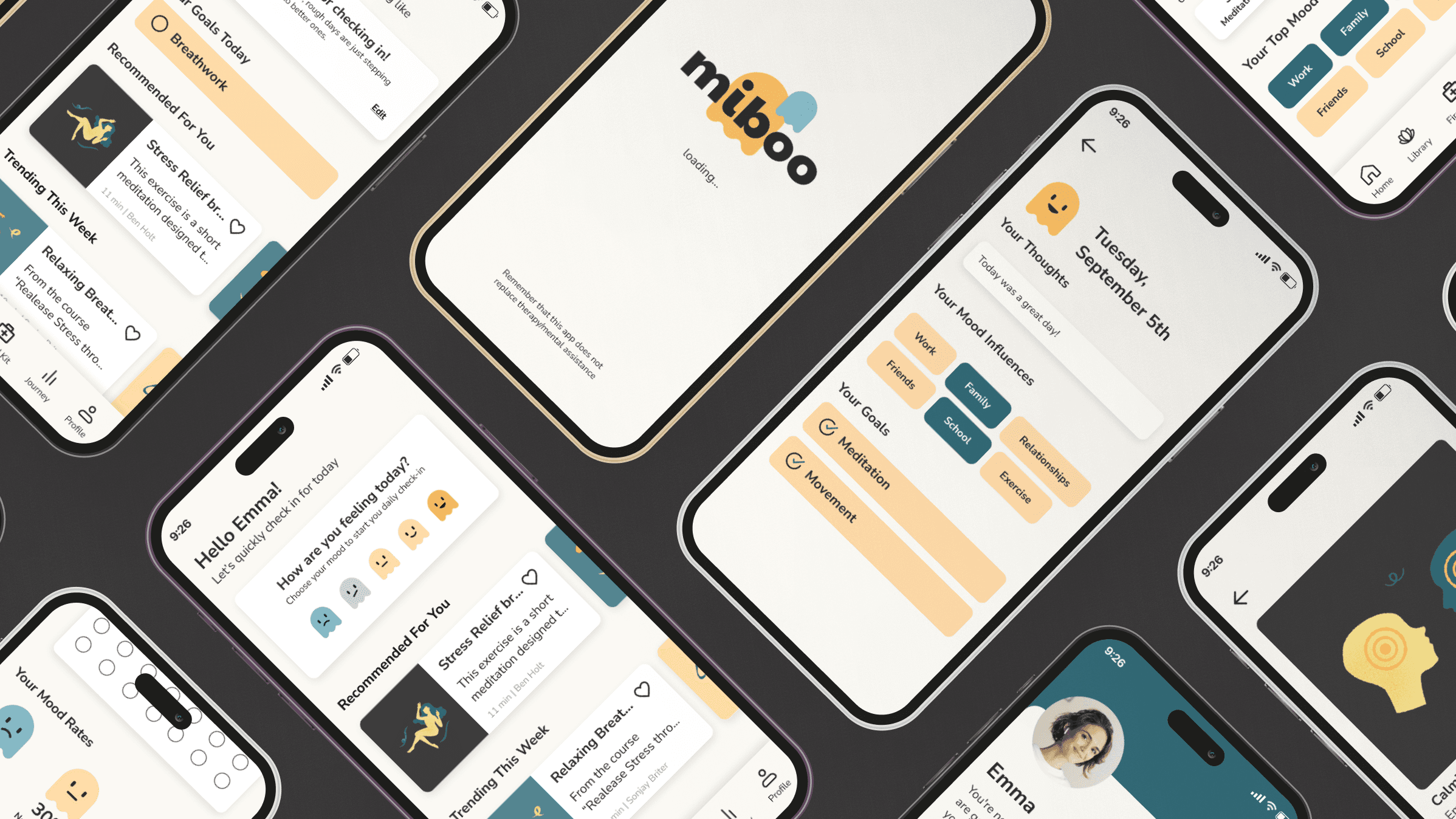
High-Fidelity Designs
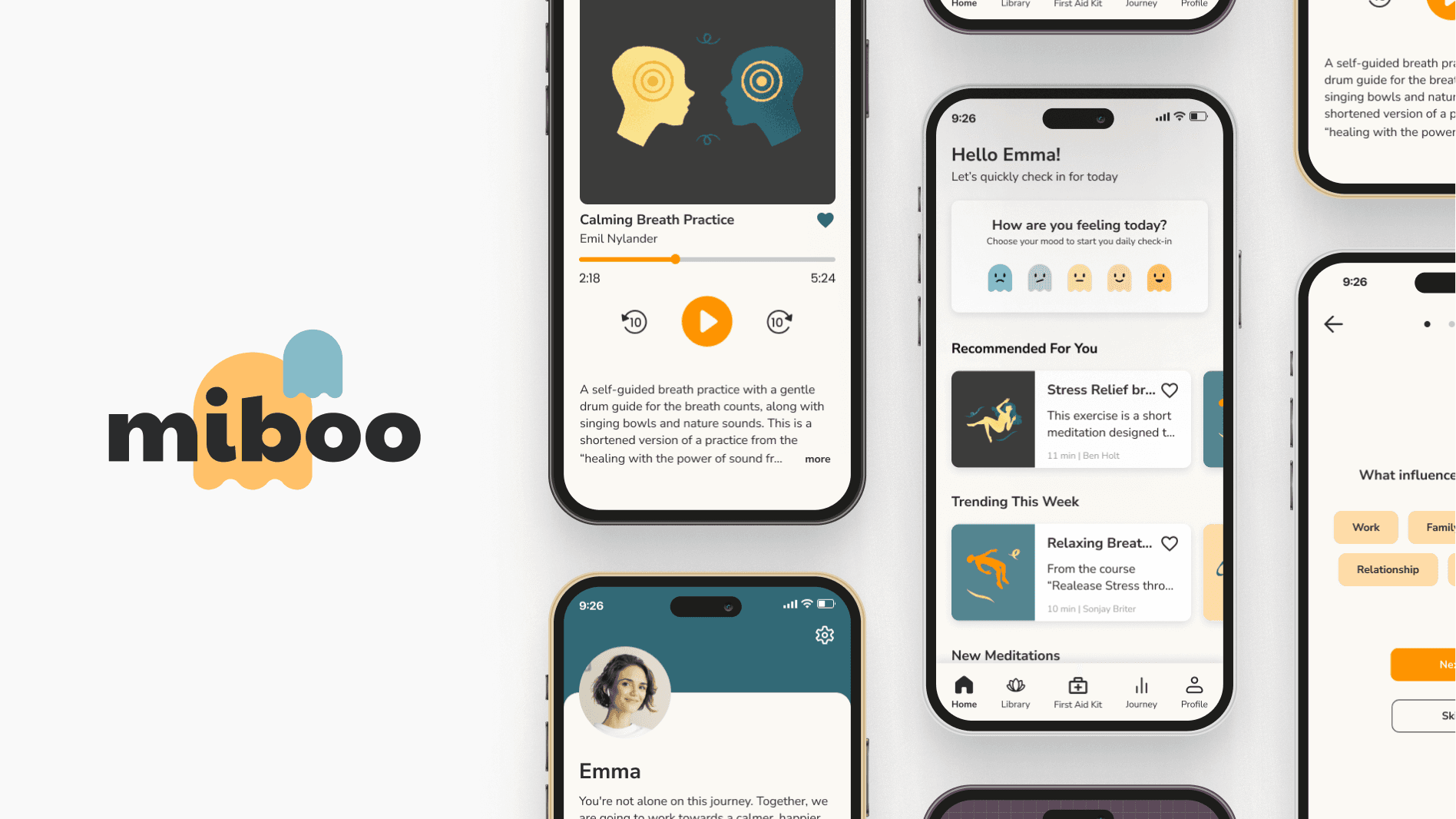
MaiBoo offers features that aid users like Emma in mood tracking, goal setting, and accessing personalized content. The app also includes a First Aid Kit for managing anxiety and panic attacks, complete with guided breathing exercises. However, it's important to note that MaiBoo is a support tool, not a substitute for professional therapy.
MaiBoo offers features that aid users like Emma in mood tracking, goal setting, and accessing personalized content. The app also includes a First Aid Kit for managing anxiety and panic attacks, complete with guided breathing exercises. However, it's important to note that MaiBoo is a support tool, not a substitute for professional therapy.
MaiBoo offers features that aid users like Emma in mood tracking, goal setting, and accessing personalized content. The app also includes a First Aid Kit for managing anxiety and panic attacks, complete with guided breathing exercises. However, it's important to note that MaiBoo is a support tool, not a substitute for professional therapy.
What´s next?
What´s next?
Moving forward, we're introducing a feature that allows users to share their progress with loved ones and therapists. This will help promote understanding and improve the quality of support. We also plan to set up personalized reminders to assist users in staying motivated without feeling overwhelmed. Additionally, recognizing the importance of sleep, we will be introducing a sleep tracking feature to help users monitor their sleep patterns and access relevant content, such as sleep meditations.
Despite the challenges, this project has been inspiring. We've gathered valuable insights to create an app that supports people dealing with anxiety. It's been an honor to contribute to this cause.
Remember to take care of your inner ghosts!
Moving forward, we're introducing a feature that allows users to share their progress with loved ones and therapists. This will help promote understanding and improve the quality of support. We also plan to set up personalized reminders to assist users in staying motivated without feeling overwhelmed. Additionally, recognizing the importance of sleep, we will be introducing a sleep tracking feature to help users monitor their sleep patterns and access relevant content, such as sleep meditations.
Despite the challenges, this project has been inspiring. We've gathered valuable insights to create an app that supports people dealing with anxiety. It's been an honor to contribute to this cause.
Remember to take care of your inner ghosts!
Moving forward, we're introducing a feature that allows users to share their progress with loved ones and therapists. This will help promote understanding and improve the quality of support. We also plan to set up personalized reminders to assist users in staying motivated without feeling overwhelmed. Additionally, recognizing the importance of sleep, we will be introducing a sleep tracking feature to help users monitor their sleep patterns and access relevant content, such as sleep meditations.
Despite the challenges, this project has been inspiring. We've gathered valuable insights to create an app that supports people dealing with anxiety. It's been an honor to contribute to this cause.
Remember to take care of your inner ghosts!
© Designed and created by Maro Borsani, 2023 - rosarioborsaniz@gmail.com
This portfolio was built with lots of love, effort, motivation, creativity, and music. Please treat it with care.
© Designed and created by Maro Borsani, 2023 - rosarioborsaniz@gmail.com
This portfolio was built with lots of love, effort, motivation, creativity, and music. Please treat it with care.